To make sure your calendar, event reminders, and other features are always
correct, please tell us your time zone (and other details) using the
drop-down menus below:
Set Date/Time format:
In 12 Hour format the hours will be displayed as 1 through 12 with “a.m.” and “p.m.”
displayed after the time (ex. 1:00p.m.). In 24 hour format the hours will be displayed as 00 through 23 (ex. 13:00).
You can always change your time zone by going to your Account Settings.
Use the dropdown menu to view the events in another time zone. The primary time zone will be displayed in parentheses.
Use the dropdown menu to view the events in another time zone. The primary time zone will be displayed in parentheses.
Visiting Daniel Brian(username: daniel_brian)
Create a new Discussion Topic
Tag
Please wait...
Select a Color
Manage Applications
Check the items that you want displayed. Uncheck all to hide the section.
Calendars
Files
Addresses
To Dos
Discussions
Photos
Bookmarks
The “Switch Navigator” button will no longer be available after February 14, 2017.
Please learn more about how to use the new Navigator by clicking this link.
Investing in Sleep: What You Shouldn't Skimp On in Your Bedroom
Creation date: Apr 28, 2026 1:20pm Last modified date: Apr 28, 2026 1:20pm Last visit date: Oct 25, 2026 5:45am
2 / 20 posts Displaying comment thread
Apr 28, 2026 ( 1 post, 1 reply )
4/28/2026
1:20pm
Daniel Brian (daniel_brian)
On average, we spend a third of our lives in the bedroom. And if that third is spent on a creaky bed under the light of cheap lamps, it's unrealistic to expect high daytime productivity. Let's be honest: the bedroom isn't a room for entertaining guests; it's your "service station."
Let's break it down point by point, so your interior design works for your recovery, not against it.
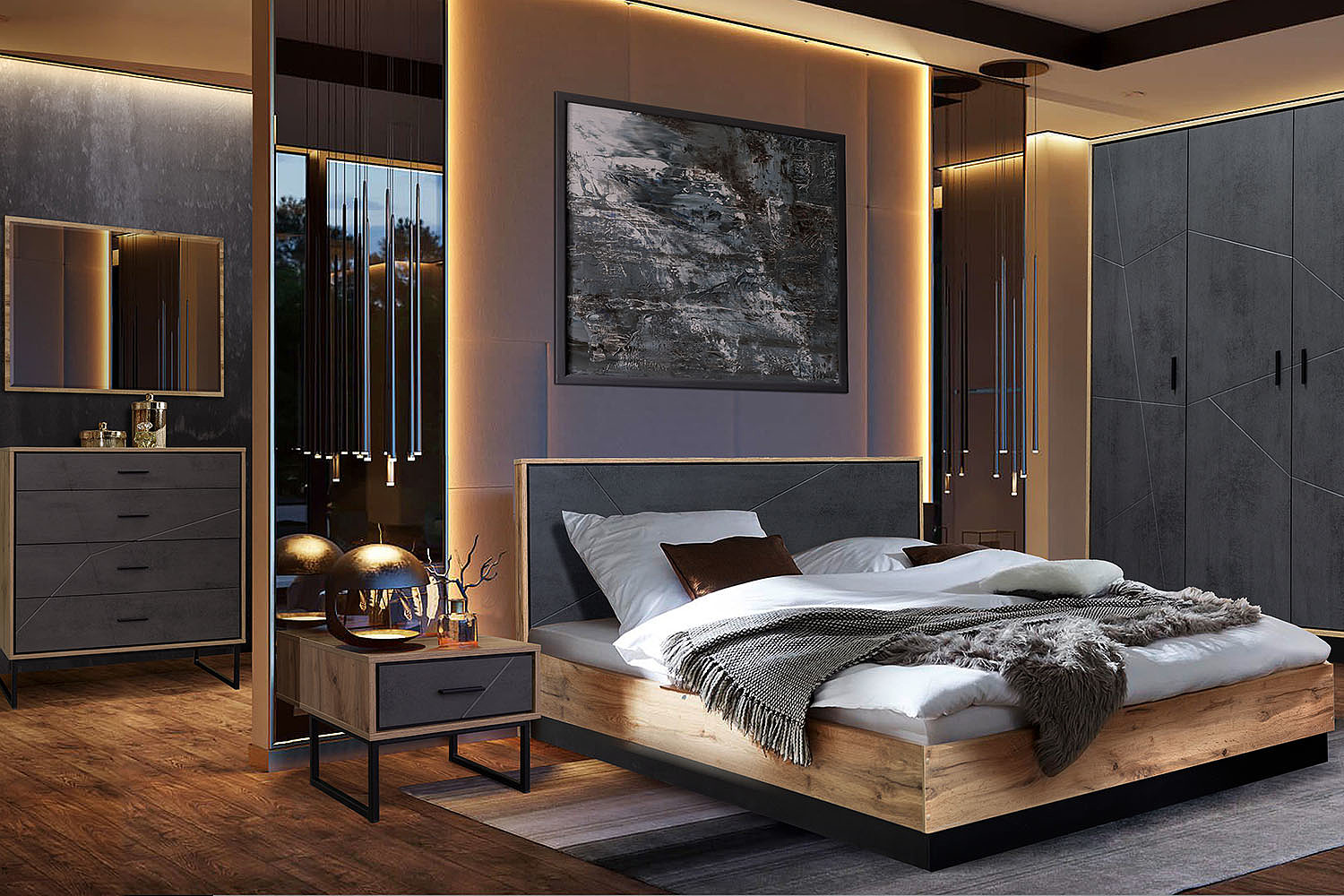
1. Frame and Foundation: Silence as a Priority A bed should be solid. The main enemy of sleep isn't poor design, but creaking with every movement.
Materials: Solid wood (oak, ash, acacia) is the standard. It's heavy, reliable, and won't turn into a "musical instrument" over time.
Construction: Pay attention to the quality of the fasteners and slats.
Note: If you read thoughtful reviews on sites like 1StopBedrooms, it becomes clear: people regret buying cheap MDF after just a couple of years. Those who invested in solid wood immediately describe the purchase as a "closed deal" for a decade.
2. Lighting scenarios instead of a single chandelier Our brain doesn't fall asleep at the flick of a switch, but under the influence of melatonin. Bright ceiling lights kill this process.
What you need: Separate lighting into levels. General lighting should be used only for cleaning. For living, use warm sources at eye level (sconces, table lamps).
Technical nuance: Use lamps with a color temperature of 2700K or lower. This signals the nervous system: "The day is over, time to slow down."
3. Tactile comfort and textiles You can buy the most expensive mattress, but if it's covered in "plasticky" synthetic materials, you won't feel comfortable. Skin is our largest sensory organ, and it doesn't tolerate deception.
Inputs: Natural cotton (satin, percale) or linen. These fabrics regulate temperature: they're cool in summer and cool in winter. This is a matter of your body's thermoregulation, not just aesthetics.
4. Visual organization and hidden storage A bedroom shouldn't feel like a warehouse. Visual clutter (an ironing board in the corner, a pile of boxes) causes microstress on a subconscious level.
Solution: If space is limited, choose beds with a lifting mechanism or built-in drawers. All household items should be hidden. The clearer the space within sight, the faster the brain unwinds before sleep.
5. Details for psychological relaxation Make the space personal, but don't go overboard. One high-quality painting, a couple of favorite books on the nightstand, or a living plant will make the room feel lived-in. It's important that your gaze doesn't stumble over unnecessary objects, but glides smoothly over the things you enjoy.
Final tip: Bedroom design isn't about wall color. It's about ergonomics, the absence of unnecessary noise, and proper lighting. By investing in a quality base, you're not buying furniture, but extra hours of energy the next day.
10:55pm
Cloud Lower (cloudlower)
This is literally a thought out loud from anyone who's ever tried to sleep on cheap furniture. When I read 1 stop bedrooms reviews, every other post was a cry from the heart. People wrote about saving for years, buying something cheaper, and then giving up, ordering a proper solid wood bed, and being blown away by the difference. When your bed doesn't move under you or creak with every breath, it truly changes your quality of life. You invested once, and forgot about the problem for 10 years.The best furniture is the one that allows you to finally stop thinking about it.
Attach this discussion to an event, task, or address
You can attach a link to this discussion to an event in your Calendar, a task in your To Do list or an Address. Check the boxes below for the data you want to
bring into the event’s or task’s description, and then click “Select text to copy” to have the next event or task you create or edit have the discussion text and link.