Blockchain technology is moving far beyond the early days of isolated cryptocurrency networks. Today, users expect ecosystems that can communicate seamlessly, transfer assets quickly, and support decentralized finance across multiple chains. This shift has accelerated the growth of interchain finance — a blockchain model focused on interoperability and cross-chain connectivity.
As the Cosmos ecosystem expands, wallets capable of handling interchain functionality are becoming essential for modern crypto users. Leap Wallet has positioned itself as a major player in this space by offering tools that simplify access to staking, decentralized applications, NFTs, and cross-chain asset management within one ecosystem.
Many Web3 users exploring the leap wallet app ecosystem through https://leapwallet.ai/ are specifically looking for efficient ways to interact with interchain finance without relying on complicated blockchain infrastructure.
Understanding Interchain Finance
Traditional blockchain networks often operate independently, limiting communication between ecosystems. This fragmentation creates barriers for users who want to move assets across networks or access decentralized finance applications on multiple chains.
Interchain finance solves this problem by enabling blockchain interoperability. Through technologies like Inter-Blockchain Communication protocols, assets and information can move securely between supported networks.
The Cosmos ecosystem has become one of the leading environments for interchain innovation, and wallets that support this infrastructure are gaining significant attention.
Why Wallets Matter in Cross-Chain Ecosystems
The Shift Beyond Basic Storage
Modern crypto wallets are no longer simple tools for holding tokens. Users now expect integrated functionality that includes:
- Multi-chain asset management
- NFT support
- Staking rewards
- Governance participation
- Decentralized exchange access
- Secure dApp connectivity
Leap Wallet addresses these needs by combining user-friendly navigation with advanced blockchain interoperability.
Simplified Cross-Chain Access
Managing assets across several blockchains can quickly become difficult when users rely on multiple wallet platforms. Leap Wallet reduces this complexity by consolidating supported Cosmos networks into one streamlined interface.
This allows users to transfer assets, explore decentralized applications, and manage staking activities without switching between separate wallets or browser extensions.
Leap Wallet and the Cosmos Ecosystem
Designed for Interoperability
Unlike general-purpose wallets built for broad blockchain compatibility, Leap Wallet focuses heavily on Cosmos ecosystems and interchain functionality. This specialized approach improves the user experience for those actively participating in Cosmos-based finance.
The wallet supports seamless interaction between interconnected blockchain networks, helping users navigate decentralized finance more efficiently.
Access to Web3 Applications
Interchain finance depends heavily on decentralized applications. Leap Wallet provides secure access to dApps connected to staking, token swaps, liquidity pools, governance systems, and NFT marketplaces.
This direct integration creates a smoother Web3 experience and encourages broader participation in decentralized ecosystems.
Security in Interchain Finance
As blockchain interoperability grows, security remains one of the biggest priorities for users moving assets between networks.
Non-Custodial Protection
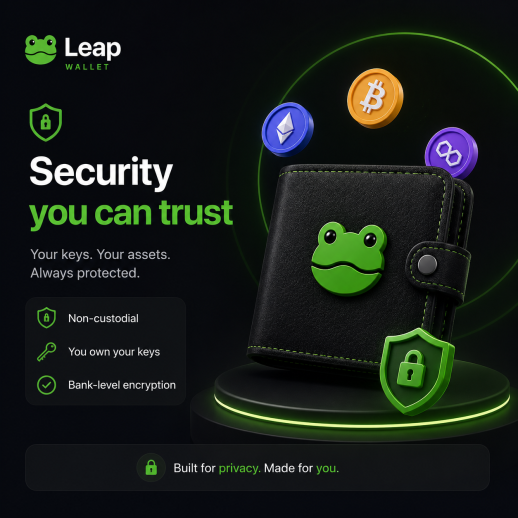
Leap Wallet operates as a non-custodial wallet, meaning users retain complete ownership of their private keys and recovery phrases. Assets remain under user control instead of being stored on centralized servers.
This decentralized security model reduces reliance on third-party custody providers and aligns with the core philosophy of blockchain technology.
Transaction Transparency
Every transaction within the wallet requires user approval. Before confirming transfers or connecting to decentralized applications, users can review transaction details directly inside the interface.
This extra layer of transparency helps minimize security risks associated with malicious contracts or unauthorized transfers.
Staking and Passive Income Opportunities
Interchain finance is closely connected to staking economies. Many Cosmos-based blockchains use delegated proof-of-stake systems that reward users for supporting network security.
Leap Wallet simplifies the staking process by integrating validator selection, delegation management, and reward tracking directly into the wallet dashboard.
Instead of relying on external staking platforms, users can monitor rewards and manage staking positions from one environment.
This convenience makes staking more accessible to both experienced investors and newcomers entering decentralized finance.
NFTs and Digital Ownership Across Chains
The expansion of interchain ecosystems has also influenced NFT development. Users increasingly want the ability to manage digital collectibles across different blockchain environments without fragmentation.
Leap Wallet supports NFT visibility and management within its interface, helping users organize assets more efficiently while participating in interconnected blockchain ecosystems.
As digital ownership continues evolving, wallets that combine NFT support with cross-chain accessibility are becoming increasingly valuable.
Mobile Accessibility and Everyday Web3 Usage
The demand for mobile-friendly blockchain tools continues growing as users expect instant access to decentralized applications and financial services.
Leap Wallet offers responsive mobile functionality that allows users to approve transactions, monitor staking rewards, and manage assets while remaining connected to interchain ecosystems from virtually anywhere.
This flexibility supports the broader adoption of decentralized finance by making blockchain participation more practical for everyday users.