To make sure your calendar, event reminders, and other features are always
correct, please tell us your time zone (and other details) using the
drop-down menus below:
Set Date/Time format:
In 12 Hour format the hours will be displayed as 1 through 12 with “a.m.” and “p.m.”
displayed after the time (ex. 1:00p.m.). In 24 hour format the hours will be displayed as 00 through 23 (ex. 13:00).
You can always change your time zone by going to your Account Settings.
Use the dropdown menu to view the events in another time zone. The primary time zone will be displayed in parentheses.
Use the dropdown menu to view the events in another time zone. The primary time zone will be displayed in parentheses.
Visiting George Morris(username: zayaaros)
Create a new Discussion Topic
Tag
Please wait...
Select a Color
Manage Applications
Check the items that you want displayed. Uncheck all to hide the section.
Calendars
Files
Addresses
To Dos
Discussions
Photos
Bookmarks
The “Switch Navigator” button will no longer be available after February 14, 2017.
Please learn more about how to use the new Navigator by clicking this link.
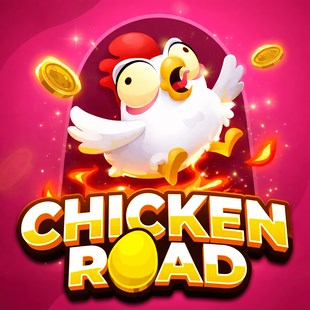
Chicken Road: Where Random Chance Ends and Prediction Begins
There is a natural temptation to look for clues whenever a sequence of results unfolds in a fast-paced casino game. A few successful rounds may seem like the beginning of a pattern, while several short outcomes can create the impression that a larger result must be approaching. This is where an important distinction becomes necessary. Chicken Road is built around uncertainty, and observing what has already happened is not the same as knowing what will happen next.
For anyone exploring the Chicken Road game in Morocco, understanding this difference can make the experience much easier to interpret. Instead of searching for hidden signals, players can focus on what the mechanics actually allow them to know.
Why Random Results Can Look Predictable
Human beings are naturally good at recognising patterns. This ability is useful in everyday life, but it can become misleading when applied to independent random events.
Imagine seeing several rounds end at relatively low multipliers. It may feel reasonable to assume that a higher result should appear soon. The problem is that the previous outcomes do not necessarily influence the next one.
The same principle applies in reverse. A player who experiences several successful rounds may start believing that the session is going particularly well and that another strong result is likely to follow.
Neither assumption provides a reliable prediction.
When researching Chicken Road, https://chickenroadmaroc.com/ can be useful for understanding the format and the general mechanics before trying to interpret individual results.
A Sequence Is Not a Forecast
A history of previous rounds tells a player what has already occurred. It does not automatically reveal what will happen in the next round.
This distinction is easy to understand intellectually but surprisingly difficult to follow emotionally. Seeing a long sequence displayed on a screen can make the information appear more meaningful than it actually is.
A player might notice:
several low multipliers in succession;
an unusually high result;
alternating short and longer rounds;
repeated results within a similar range.
All of these observations can be factually correct without providing a dependable forecasting method.
The Gambler’s Fallacy in Practice
Why “It Must Be Due” Is Misleading
One of the most common reasoning errors is the belief that an opposite result becomes more likely simply because the same type of result has appeared repeatedly.
Suppose several rounds finish quickly. A player may think that a longer round is now “due.” But if each round is independent, the previous sequence does not create an obligation for the next outcome to compensate for it.
This is often called the gambler’s fallacy.
The same problem can appear after a big result. A particularly high multiplier may encourage someone to believe that another large outcome is unlikely immediately afterward. That is also an assumption rather than a reliable prediction.
What Players Can Actually Control
The inability to predict the next result does not mean that a player has no decisions to make.
Budget and Session Limits
Players can control how much money they are willing to spend, how long they want to play and whether they continue after reaching a personal limit.
These decisions are fundamentally different from predicting an outcome.
For example, choosing a fixed entertainment budget is a controllable decision. Increasing a stake because several previous rounds were unsuccessful is an attempt to respond to randomness.
Recognising Emotional Patterns
A useful skill is noticing when observation starts turning into prediction. If a player begins thinking that a certain multiplier is “coming next” because of recent results, it may be time to step back.
The visual simplicity of Chicken Road can make this particularly interesting. A player can see movement, progress and changing multipliers in real time, which naturally encourages attention to sequences.
Why Experience Does Not Equal Prediction
Playing a game repeatedly can certainly improve familiarity with its interface and rules. However, familiarity should not be confused with an ability to forecast random outcomes.
An experienced player may know exactly where the controls are, understand how the multiplier changes and recognise the available decisions immediately. None of those skills provides certainty about the next result.
For players in Morocco, this is an important distinction when evaluating online discussions about supposed Chicken Road strategies. A confident explanation or a collection of previous results may sound convincing while still offering no genuine predictive advantage.
The most useful approach is therefore to separate knowledge from expectation. Know the mechanics, understand the role of chance, recognise common psychological biases and make only the decisions that are genuinely within your control. That perspective allows the uncertainty at the heart of the Chicken Road experience to remain exactly what it is: uncertainty, rather than a pattern waiting to be decoded.
Attach this discussion to an event, task, or address
You can attach a link to this discussion to an event in your Calendar, a task in your To Do list or an Address. Check the boxes below for the data you want to
bring into the event’s or task’s description, and then click “Select text to copy” to have the next event or task you create or edit have the discussion text and link.