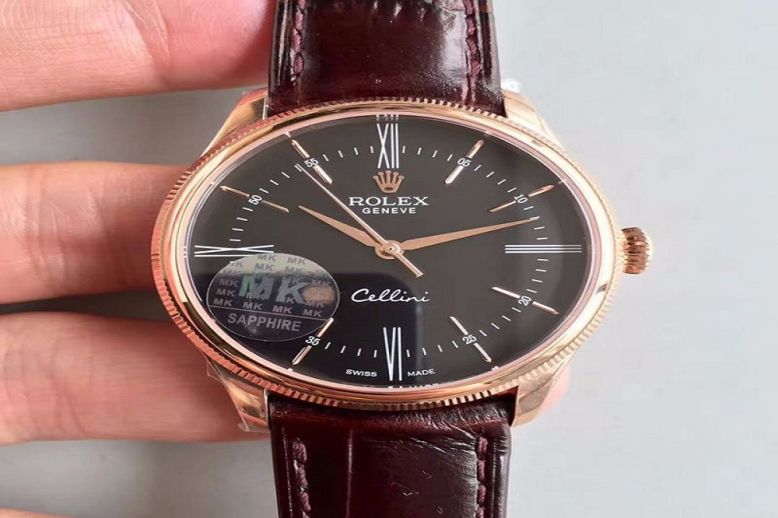
Luxury watches have never been so well-known. With prices rising rapidly, demand growing, and supply dwindling by the day, the fake watch industry is booming at the moment. You might not be interested in that, and you might be pretty well-versed in how to identify and avoid a fake watch—but I'm here to let you know it's not that simple. If you don't want to get stung by fake watches, here are ten things to know.
More fakes exist than real ones
For a sector that prides itself on its rarity and exclusivity, the Swiss watch industry is a giant, accounting for a third of the entire global market. Switzerland produces about 20 million watches a year, and Rolex is the market leader by market share, producing around a million watches per year.
It stands to reason then that Rolex is also the most faked watch brand in the world, followed closely by genuine market runners-up Cartier and Omega, but what is surprising is just how big this fakery has gotten. Almost twice as many fake watches are produced as Swiss watches, bringing in a whopping $1 billion in profit. The fake watch industry produces two fake watches for each Swiss watch made. Get more info about wholesale replica rolex watches.
The fifth most faked thing in the world
Those are huge numbers in relation to the watch industry, but generally luxury watches aren't worn by the majority of people, so you would expect that fakes would sit quite low on the list of things to watch for. Despite the relatively high cost of luxury watches compared to other fashion items, they still rank among the top five most faked products in the world, making up 7% of all fakes. Fake electricals, leather goods, clothing and, at the top, footwear make up almost a quarter of all faked goods worldwide.
The accuracy of fake watches is very high
There is a tendency for people to interact with fake watches only with those that don't look very convincing. Despite the fact that these extremely low-quality products represent the bulk of fake watch production, there is a degree of bias involved. A false sense of security can result when it comes to understanding the wider problem when only fake watches that are noticeable bad register as fake.
The reality is that the evolution of technology means that a fake watch can indeed be very accurate, almost imperceptible. However, this naturally brings up the notion of cost difference, which we will discuss in a moment. However, it takes considerable time and effort to make a fake watch as close to the original as possible, which becomes closer and closer to identical over time.
Machines have been faked by the fakes
There is a possibility that you may wonder how fake watch manufacturers are able to improve their accuracy. Swiss watch industry machinery is incredibly expensive, prohibitively expensive enough that many Swiss brands cannot afford it themselves.
The fake industry doubles down on its modus operandi here since the machinery it uses is also fake. In order to protect their investment from being wasted, manufacturers spend a lot of time and money developing these machines, developing mechanisms and tools that are protected by patents—but those patents mean nothing to the fakers. In other words, they copy the machine itself, a process they have perfected over the years.
Fake Rolex isn't all they do
Considering that Rolex is generally the most popular Swiss watchmaker anyway, it makes sense that it would be the most faked watch brand. This also provides an explanation for why fake watches are so much cheaper than real watches. The fake industry simply rides the coattails of all that work and expense when Rolex spends $100m on marketing every year to make itself the world's most popular watch brand.
That logic doesn’t just apply to Rolex. Since the equipment used to replicate genuine watches has become increasingly flexible, any marketing effort aimed at an original brand can be parasitically benefited. Even the humble Casio F-91W is not immune to fakery. You’ll also see fakes of less well-known Swiss brands like Ulysse Nardin and Corum, as well as watchmakers from outside Switzerland like Seiko and Sinn.
New isn't just faked
The same misplaced confidence applies to vintage watches as well. The vintage watch market is a beast unto itself, operating independently of the brands themselves—but it remains a target for fakers. The Double Red Sea-Dweller and Paul Newman Daytona are replicated in large quantities, with great attention to even the smallest details. And that's not just Rolex. Even discontinued models that sit halfway between new and vintage are being made into fake Omega, Tag Heuer, and Breitling watches.
Fakes don't just target unsuspecting buyers
Who purchases the more accurate fakes if the poor-quality fakes are purchased for not very much by people who know what they're buying? Many are sold to unsuspecting victims thinking they're getting a great deal, but many are purchased by people who understand exactly what they're purchasing and are attempting to find the most accurate fake.
These people are paying a lot! Although fake watches are much cheaper than Swiss originals due to cheap labour and minimal overheads, the most accurate fakes still cost hundreds, sometimes thousands of dollars. This money is spent on the outside only. The most complicated part, the movement, is still far away from the original, even though it requires the most skilled labour to make. The most accurate fakes often have closed case backs, which explains why they are considered most accurate.
Real-time feedback from the community
The manufacturing of fake watches relies on scanning and replicating originals, but even then, there are still small details that are missing. Despite the fact that there’s a whole community dedicated to making these fake watches as authentic as possible, there are shades of colour, thickness of print, size of markers—if they’re out, even a small amount, the community will report it.
A fake watch isn't just one version, there are many, and they change constantly, often reissued with improvements identified as being made to make them more accurate. Iterative models can be quite efficient when they happen quickly, sometimes even within months of each other. Add to this the fact that multiple factories are competing to produce the most accurate edition and you get an impressively efficient iterative process.
Fakes are impossible to spot
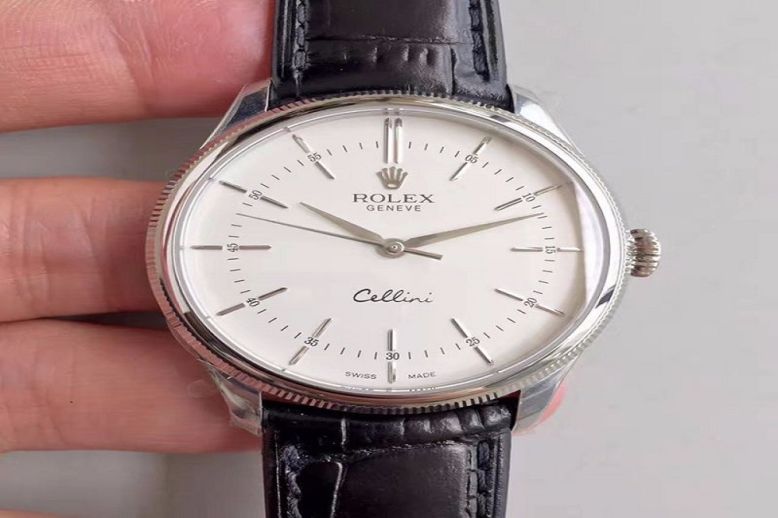
If you combine all of this, what does it mean for someone hoping to avoid getting stung? To be honest, it means you can't rely on yourself to tell whether a watch is real or fake. Oftentimes, a real example of the watch is necessary, and for watches with a closed case back, as most Rolexes are, you have to remove the case back to see the movement.
There’s a bravado in knowing the difference between a real watch and a fake one by the weight and feel, but that’s a misplaced confidence in a scenario that’s often without consequence for the person claiming to know the difference. A situation where you are forced to make a decision that could result in a loss of thousands of dollars is very, very easy to come up short. I wouldn’t take the risk, and I wouldn’t recommend you either. Instead, shop at reputable retailers.
Industry Doesn't Know What To Do
The industry is at a loss as to what to do about all this. It can't stop the production, it can't stop the purchase, it can't stop the shipment, it can try to stop the import—although many fake watches arrive disguised as other products—but ultimately it is stuck.
Similarly to the film industry's attempt at blaming the customer, the same thing has happened here, with ordinary families being accused of criminality for purchasing fake watches. However, I don't think this is a particularly effective tactic-if anything, it is antagonistic. The rising prices of Swiss watches make it easy to see why so many people are willing to buy Copy Watch Wholesale.