To make sure your calendar, event reminders, and other features are always
correct, please tell us your time zone (and other details) using the
drop-down menus below:
Set Date/Time format:
In 12 Hour format the hours will be displayed as 1 through 12 with “a.m.” and “p.m.”
displayed after the time (ex. 1:00p.m.). In 24 hour format the hours will be displayed as 00 through 23 (ex. 13:00).
You can always change your time zone by going to your Account Settings.
Use the dropdown menu to view the events in another time zone. The primary time zone will be displayed in parentheses.
Use the dropdown menu to view the events in another time zone. The primary time zone will be displayed in parentheses.
Check the items that you want displayed. Uncheck all to hide the section.
Calendars
Files
Addresses
To Dos
Discussions
Photos
Bookmarks
The “Switch Navigator” button will no longer be available after February 14, 2017.
Please learn more about how to use the new Navigator by clicking this link.
How to Evaluate Long-Term Capital Appreciation in Dubai Real Estate?
Investors seeking sustainable wealth growth often focus on the potential for long-term capital appreciation in their property portfolios. Dubai's real estate market stands out as a dynamic environment where strategic evaluation can unlock significant value. Knowing how to evaluate long-term capital appreciation in Dubai real estate is essential for making informed investment choices that align with financial goals.
Dubai's rapid urban development, favorable regulations, and diverse property offerings make it a compelling landscape for residential and commercial investors alike. However, capital appreciation is influenced by various factors beyond mere price trends. This guide offers a strategic overview and decision framework to assess long-term capital gains effectively within Dubai's unique real estate context.
Key Factors Influencing Capital Appreciation in Dubai Real Estate
Economic Growth and Market Cycles
Dubai's economy directly impacts property values, driven by sectors such as tourism, finance, and trade. Periods of robust economic expansion often coincide with rising real estate prices, while downturns may slow appreciation. Monitoring market cycles enables investors to time acquisitions and sales to optimize returns.
Government initiatives aimed at diversifying the economy provide additional support for sustained growth. Investors should evaluate macroeconomic indicators and policy developments that shape demand for housing and commercial spaces.
Location and Infrastructure Development
Prime locations near business hubs, transportation networks, and lifestyle amenities tend to experience stronger capital appreciation. Infrastructure projects such as new metro lines, highways, and waterfront developments elevate the desirability of neighborhoods. Strategic site selection remains a cornerstone for long-term value creation.
Properties within emerging districts often offer higher appreciation potential due to initial undervaluation and growth prospects. For example, developments like Shahrukhz Residences by Danube integrate modern design with access to essential amenities, attracting discerning buyers and tenants. Investing in such projects, like the well-known Dubai property can contribute positively to an investor’s portfolio.
Regulatory Environment and Ownership Rights
Dubai’s real estate regulations, including freehold ownership and transparent property registration, create a secure investment climate. Awareness of legal frameworks ensures compliance and safeguards against unexpected risks. Changes in legislation or visa policies can also influence market sentiment and capital flows.
Investors should consult official resources and legal experts to remain updated on Dubai property regulations. This knowledge helps in anticipating shifts in market dynamics and maintaining portfolio resilience.
Analyzing Property Types and Development Status
Off-Plan vs. Completed Properties
Off-plan real estate often offers lower entry prices with the possibility of significant appreciation upon project completion. However, these investments carry construction and delivery risks. Conversely, completed properties provide immediate rental income and clearer valuation benchmarks.
Assessing the developer’s track record and project timelines is critical when considering off-plan opportunities. Established developers with successful histories reduce uncertainty, enhancing the likelihood of capital gains.
Luxury Residential Developments and Waterfront Apartments
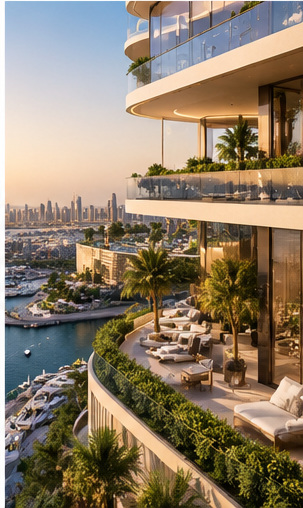
High-end residential towers and waterfront apartments attract premium buyers, fostering price stability and appreciation. Demand for lifestyle-oriented properties remains strong among expatriates and affluent investors. These segments often benefit from exclusive amenities and scenic locations.
Dubai Maritime City and similar luxury precincts illustrate how premium waterfront living can drive robust capital growth. Investors should analyze market trends and buyer preferences within these niches to target sustainable appreciation.
Residential Rental Yields as an Appreciation Indicator
Rental yields provide insight into the income-generating capacity of a property, which correlates with its market value. Higher yields suggest strong demand, supporting future price increases. Evaluating rental performance alongside capital appreciation offers a comprehensive investment perspective.
Monitoring rental trends in specific communities helps predict long-term capital growth. Investors can use these data points to balance income generation with asset appreciation objectives.
Market Data and Trend Analysis Techniques
Tracking Real Estate Market Trends
Regular analysis of price indices, transaction volumes, and supply-demand metrics reveals underlying market momentum. Dubai’s real estate market trends indicate shifts in buyer behavior and investment hotspots. Utilizing reliable data sources enhances decision accuracy. For those exploring practical options, utilizing trusted Shah Rukh Khan Dubai property specialists provides reliable support.
Staying informed about recent shifts in the Dubai housing market enables investors to react proactively. For instance, fluctuations in home sale transactions provide signals on market sentiment and potential price trajectories.
The latest reports highlight that despite a regional uncertainty causing a dip in home sales, the overall resilience of the market supports steady capital appreciation. These insights assist investors in adapting strategies accordingly.
Comparative Market Analysis (CMA)
Evaluating similar properties in comparable locations offers a benchmark for potential appreciation. CMAs help identify undervalued assets and forecast future price movements. This analytical method complements broader trend assessments.
Investors should incorporate factors such as property condition, amenities, and neighborhood development when conducting CMAs. A thorough comparison sharpens investment decisions and mitigates valuation errors.
Impact of Global and Regional Events
Global economic shifts, geopolitical events, and policy changes affect investor confidence and capital flows. Dubai’s position as a global hub means its real estate market is sensitive to such external factors. Understanding these influences aids in risk management.
Scenario planning and stress testing investment assumptions against potential disruptions prepare investors for volatility. This strategic foresight supports long-term capital preservation and growth.
Evaluating Developer Reputation and Project Quality
Track Record and Financial Stability
Developers with consistent delivery records and sound financial health reduce investment risks. Their projects often maintain better quality standards, enhancing property values. Due diligence on developer credentials is essential before commitment.
Researching past projects and customer feedback provides practical insights. Reliable developers contribute to sustained capital appreciation through timely completion and quality assurance.
Design, Amenities, and Community Planning
Properties featuring modern design and comprehensive amenities attract higher demand and premium pricing. Community planning that includes green spaces, security, and retail options enhances livability. These attributes influence long-term desirability and appreciation.
Investors should evaluate how well a development meets lifestyle expectations and market needs. Superior projects often achieve faster value growth due to buyer preference.
Location within Emerging Strategic Zones
Projects situated in newly designated growth corridors or economic zones offer higher appreciation potential. Dubai’s urban expansion creates fresh opportunities in areas supported by infrastructure and commercial activity. Identifying such locations early is advantageous.
For example, developments near Dubai Maritime City benefit from strategic positioning and ongoing urban enhancements. These factors contribute to upward valuation trends and investment appeal.
Taking Action: Strategic Steps to Maximize Long-Term Appreciation
Setting Clear Investment Objectives
Defining goals regarding capital growth, income generation, and risk tolerance guides the evaluation process. Clarity on investment horizon and exit strategies shapes property selection and financing choices. A disciplined approach aligns acquisitions with long-term wealth creation.
Investors should revisit objectives periodically to adjust for market changes and personal circumstances. This flexibility ensures sustained portfolio relevance.
Diversifying Across Property Types and Locations
Spreading investments among various property categories and neighborhoods mitigates risk and captures multiple appreciation drivers. Diversification balances exposure to market fluctuations and capitalizes on emerging opportunities. Strategic allocation enhances overall portfolio performance.
Incorporating projects from established developers and emerging zones provides a blend of stability and growth potential. This approach complements evaluation frameworks for long-term gains.
Ongoing Market Monitoring and Portfolio Review
Continuous market surveillance and property performance analysis allow timely adjustments. Tracking indicators such as rental yields, sales activity, and regulatory updates informs decision-making. Periodic portfolio rebalancing optimizes capital appreciation outcomes.
Engaging with market experts and utilizing authoritative reports supports informed reassessments. This proactive management sustains investment momentum over time.
Investors can find valuable insights on the shifting dynamics affecting the Dubai property market through reliable news sources that report on real estate market trends and transaction volumes, enabling more precise evaluation.
Making Informed Strategic Choices for Dubai Property Investments
Successfully evaluating long-term capital appreciation in Dubai real estate requires a strategic overview that integrates economic indicators, location analysis, and regulatory understanding. Investors must analyze property types, developer credibility, and market data to identify assets poised for sustainable growth. Applying comprehensive frameworks ensures alignment with financial goals and mitigates risks.
Incorporating rental yield assessments and maintaining active market monitoring further strengthens investment decisions. The evolving nature of Dubai’s real estate necessitates ongoing adaptation and due diligence. By focusing on these critical factors, investors can navigate the market confidently and maximize the value of their holdings over time.
Ultimately, evaluating long-term capital appreciation in Dubai real estate is a multifaceted process demanding strategic insight and disciplined execution. Those who integrate these considerations stand to benefit from the emirate’s dynamic property landscape and robust economic environment.
Shahrukhz Danube Maritime
Dubai Maritime City, Dubai, United Arab Emirates (UAE)
Creation date: Oct 12, 2026 12:39am Last modified date: Oct 12, 2026 12:39am Last visit date: Oct 12, 2026 11:27am
Attach this document to an event, task, or address
You can attach a link to this document to an event in your Calendar, a task in your To Do list or an Address. Check the boxes below for the data you want to
bring into the event’s or task’s description, and then click “Select text to copy” to have the next event or task you create or edit have the document text and link.