To make sure your calendar, event reminders, and other features are always
correct, please tell us your time zone (and other details) using the
drop-down menus below:
Set Date/Time format:
In 12 Hour format the hours will be displayed as 1 through 12 with “a.m.” and “p.m.”
displayed after the time (ex. 1:00p.m.). In 24 hour format the hours will be displayed as 00 through 23 (ex. 13:00).
You can always change your time zone by going to your Account Settings.
Use the dropdown menu to view the events in another time zone. The primary time zone will be displayed in parentheses.
Use the dropdown menu to view the events in another time zone. The primary time zone will be displayed in parentheses.
Check the items that you want displayed. Uncheck all to hide the section.
Calendars
Files
Addresses
To Dos
Discussions
Photos
Bookmarks
The “Switch Navigator” button will no longer be available after February 14, 2017.
Please learn more about how to use the new Navigator by clicking this link.
How to Improve Blood Flow Before a Finger-Prick Test
Performing a finger-prick test requires adequate blood flow to ensure reliable sample collection and accurate results. Many individuals face challenges with insufficient blood flow, which can complicate the process and affect sample quality. This article offers an in-depth analytical breakdown of effective methods to enhance circulation prior to a finger-prick test, focusing on practical techniques and physiological insights.
Improving blood flow before a finger-prick test is crucial not only for ease of collection but also for maintaining sample integrity. Given the rising preference for home testing solutions, understanding how to optimise blood flow becomes especially relevant for those using a blood test kit UK or similar at-home devices. This guide is designed to inform anyone preparing for a finger-prick test, highlighting the core concepts and comparing various approaches.
Physiological Factors Influencing Blood Flow in Finger-Prick Tests
The Role of Peripheral Circulation
Peripheral circulation refers to the flow of blood through the smallest blood vessels, including capillaries in the fingers. Blood flow in these areas can be influenced by temperature, hydration, and vascular health. Low peripheral circulation often results in slower blood flow, complicating the collection process during a finger-prick test.
Understanding peripheral circulation helps explain why some individuals experience difficulty obtaining an adequate blood sample. Factors such as cold environments or dehydration constrict blood vessels, reducing capillary refill and the ease of blood extraction.
Impact of Temperature and Hydration
Temperature exerts a significant influence on blood vessel dilation and constriction. Warmer temperatures promote vasodilation, increasing blood flow to the extremities. Conversely, cold exposure causes vasoconstriction, limiting blood supply to fingers and making blood collection challenging.
Hydration also plays a critical role by maintaining blood volume and viscosity. Dehydration thickens the blood and reduces flow, whereas proper hydration supports optimal circulation. Together, temperature and hydration form modifiable factors to improve blood flow before sampling.
Influence of Physical and Emotional Factors
Physical activity prior to a finger-prick test can enhance circulation by increasing heart rate and promoting vasodilation. Even mild hand movements or shaking can stimulate blood flow to the fingers. Emotional states like stress or anxiety may cause vasoconstriction, which can hinder sample collection.
Relaxation techniques and light exercise are practical ways to counteract stress-induced reduction in blood flow, making them valuable preparatory steps for finger-prick testing.
Effective Techniques to Enhance Blood Flow Before Testing
Warm Water Immersion
Immersing the hand in warm water for a few minutes is a widely recommended method to improve blood flow. The heat causes blood vessels to dilate, increasing perfusion to the fingertips. This technique is simple, safe, and can be easily performed at home before a finger-prick test.
However, it is essential to avoid overly hot water, which could cause discomfort or skin irritation. A temperature just above body temperature is optimal for promoting circulation without adverse effects.
Gentle Hand Massage and Movement
Massaging the fingers and hand stimulates circulation by mechanically encouraging blood flow. Light squeezing or tapping motions can enhance capillary refill and prepare the site for blood collection. Additionally, performing hand exercises such as opening and closing the fist can increase blood flow by activating muscles and vessels.
Combining massage with warm water immersion provides a synergistic effect, further facilitating blood flow before a finger-prick procedure.
Maintaining Proper Hydration
Ensuring sufficient fluid intake in the hours leading up to a finger-prick test supports blood volume and reduces viscosity. Drinking water enhances overall circulation and helps prevent complications related to thickened blood. Hydration should be balanced and consistent rather than excessive to avoid dilution errors in the sample.
For individuals preparing to use a blood test kit UK, maintaining hydration is a straightforward preventive measure that can improve sample quality and collection ease. When you like to discover new information about private blood tests, you have to sneaka peek here at https://dragondx.com/tests site.
Comparing Preparation Methods: Pros and Cons
Warmth Application Techniques
Applying warmth to the hand can be achieved through warm water immersion, heating pads, or warm compresses. Warm water immersion is convenient and allows easy control of temperature. Heating pads provide sustained heat but may risk overheating or burns if used improperly.
Warm compresses offer flexibility but may not uniformly heat the area. Overall, warm water immersion remains the preferred method due to its simplicity and safety profile.
Physical Stimulation Versus Pharmacological Aids
Physical stimulation, such as massage and hand movements, promotes natural vasodilation without introducing external substances. This approach carries minimal risk and is accessible to most individuals. Pharmacological aids, like topical vasodilators, may enhance blood flow but require caution due to potential side effects or interactions.
Given these considerations, physical techniques are advisable first-line strategies before resorting to any medicinal options.
Timing and Environmental Considerations
Timing the finger-prick test during periods of optimal circulation, such as after light exercise or in a warm environment, can improve blood flow. Environmental factors like room temperature and humidity also impact peripheral circulation. Conducting the test in a comfortable setting reduces vasoconstriction and facilitates sample collection.
Planning the test with these factors in mind contributes to reliable and efficient blood sampling.
Key Laboratory Considerations for Finger-Prick Sampling
Sample Collection and Handling
Proper sample collection is critical to maintaining the integrity of a finger-prick blood sample. Techniques that improve blood flow contribute directly to obtaining sufficient volume without excessive squeezing, which can contaminate the sample. Accurate specimen handling minimises pre-analytical errors and ensures valid results.
Attention to detail during collection supports the overall quality of pathology testing and aligns with recognised standards in laboratory medicine.
Impact of Analytical Variation on Test Outcomes
Analytical variation refers to the differences that can arise during sample processing and measurement. Improving blood flow before collection helps reduce variability caused by insufficient sample volumes or haemolysis. Consistent specimen quality enhances the reliability of test results and facilitates accurate clinical interpretation.
Laboratories rely on well-prepared samples to maintain precision and adhere to quality assurance protocols.
Role of Medical Laboratory Accreditation
Accreditation standards ensure that laboratories follow stringent procedures for sample management and analysis. Proper preparation before a finger-prick test supports compliance with these standards by minimising sample degradation and contamination. This contributes to trustworthy outcomes for individuals using services such as private blood tests or home blood test kits.
Adhering to best practices in sample collection aligns with the requirements of medical laboratory accreditation bodies and safeguards test validity.
Optimising Preparation for Home-Based Blood Testing
Adapting Techniques for At-Home Use
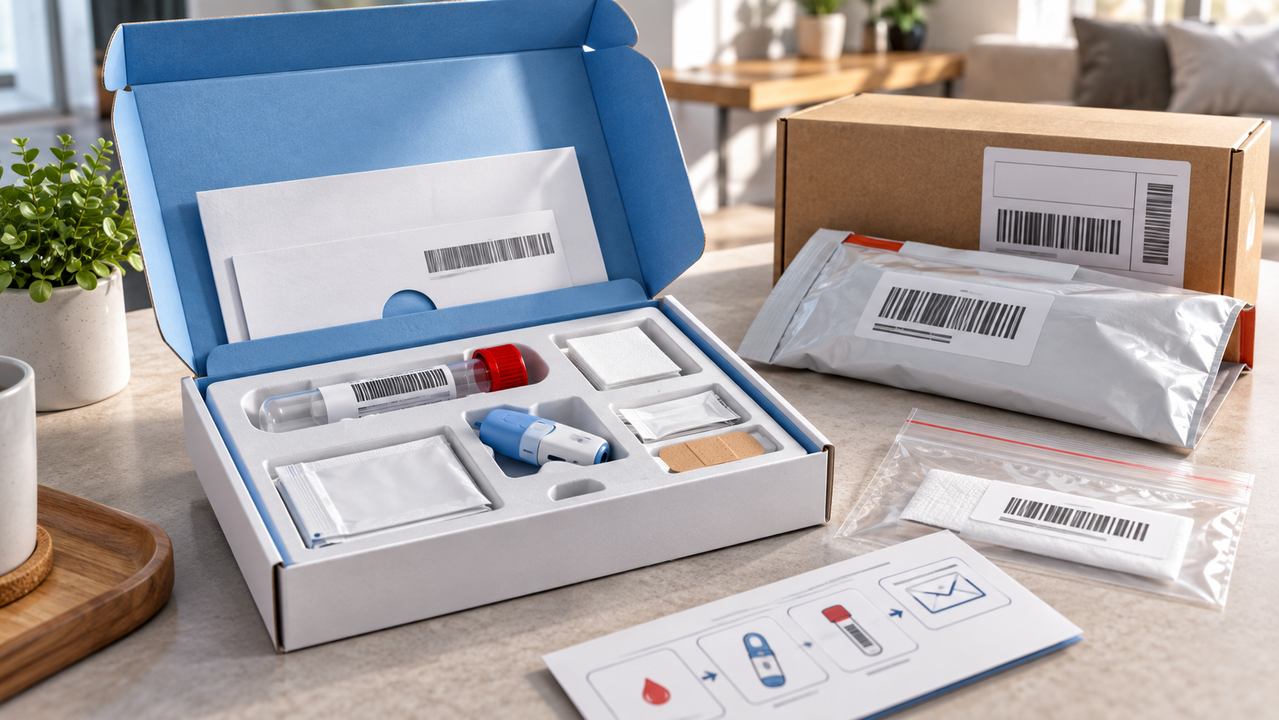
Home blood test kits require users to self-collect samples, making preparation steps all the more important. Techniques like warming the hand, light massage, and maintaining hydration can be easily performed without professional assistance. Clear instructions from providers enhance user confidence and success rates with home sampling.
For those employing a blood test kit UK, following preparation guidelines reduces the likelihood of inadequate samples and repeat tests.
Addressing Common Challenges in Sample Collection
Challenges such as poor blood flow, discomfort, and insufficient sample volume are common in finger-prick testing. Preparation techniques mitigate these issues by improving circulation and reducing tissue trauma. Educating users on effective methods supports better outcomes and increases the reliability of at-home testing options.
Proactive preparation also minimises delays and complications in pathology testing and facilitates timely health assessments.
Ensuring Sample Integrity During Transport
After collection, proper sample transport is vital to maintain sample stability and integrity. While improving blood flow aids initial collection, subsequent handling impacts the overall test accuracy. Following recommended protocols for packaging and shipping preserves the sample for accurate laboratory analysis.
Attention to transport conditions complements preparation efforts, ensuring that finger-prick tests provide meaningful results.
Key Takeaways for Improving Blood Flow Before a Finger-Prick Test
Enhancing blood flow before a finger-prick test involves a combination of physiological understanding and practical preparation techniques. Warm water immersion, gentle massage, and adequate hydration stand out as effective methods to promote peripheral circulation. These approaches improve the ease of sample collection and contribute to sample integrity.
Considering both individual factors such as stress and environmental conditions can further optimise blood flow. For users of home testing solutions like DragonDX blood test kits, these preparatory steps support accurate and reliable outcomes. Ultimately, incorporating these methods into pre-test routines benefits both users and laboratories by reducing analytical variation and ensuring better specimen quality.
Applying these insights when preparing for a finger-prick test enhances the overall testing experience and maximises the value of pathology testing in health monitoring.
Creation date: Oct 4, 2026 4:18am Last modified date: Oct 4, 2026 4:18am Last visit date: Nov 22, 2026 4:37am
Attach this document to an event, task, or address
You can attach a link to this document to an event in your Calendar, a task in your To Do list or an Address. Check the boxes below for the data you want to
bring into the event’s or task’s description, and then click “Select text to copy” to have the next event or task you create or edit have the document text and link.