To make sure your calendar, event reminders, and other features are always
correct, please tell us your time zone (and other details) using the
drop-down menus below:
Set Date/Time format:
In 12 Hour format the hours will be displayed as 1 through 12 with “a.m.” and “p.m.”
displayed after the time (ex. 1:00p.m.). In 24 hour format the hours will be displayed as 00 through 23 (ex. 13:00).
You can always change your time zone by going to your Account Settings.
Use the dropdown menu to view the events in another time zone. The primary time zone will be displayed in parentheses.
Use the dropdown menu to view the events in another time zone. The primary time zone will be displayed in parentheses.
Visiting Science Cache(username: sciencecache)
Tag
Please wait...
Select a Color
Manage Applications
Check the items that you want displayed. Uncheck all to hide the section.
Calendars
Files
Addresses
To Dos
Discussions
Photos
Bookmarks
The “Switch Navigator” button will no longer be available after February 14, 2017.
Please learn more about how to use the new Navigator by clicking this link.
Revolutionizing Precision: The Rise of PCD Diamond-Tipped Drills
In the world of industrial manufacturing and high-precision engineering, the demand for cutting-edge drilling technology has never been higher. Industries ranging from aerospace to automotive rely heavily on tools that can deliver accuracy, speed, and durability simultaneously. Among these, pcd diamond-tipped drills have emerged as a game-changer, offering unparalleled performance and efficiency.
These drills are transforming the landscape of machining by combining advanced materials science with innovative engineering design, resulting in tools that redefine what is possible in drilling applications.
What Sets PCD Diamond-Tipped Drills Apart?
PCD, or polycrystalline diamond, is an engineered material composed of numerous microscopic diamond crystals sintered together under high pressure and temperature. This unique composition gives PCD diamond-tipped drills their extraordinary hardness and wear resistance. The diamond tips provide a cutting edge that remains sharp far longer than conventional drill bits, even when working on abrasive or hard materials.
One key advantage that pcd diamond-tipped drills bring to the table is their ability to maintain precision and surface finish quality over extended use. Their resistance to heat and abrasion reduces tool wear, meaning fewer replacements and downtime for manufacturers. For companies focused on productivity and cost-efficiency, these drills represent a significant upgrade.
This innovation is well embodied in the offerings available through pcd diamond-tipped drills, which serve a wide spectrum of industrial needs. Whether employed in composite material machining or metalworking, these drills improve operational reliability dramatically.
Applications Transforming Manufacturing
The versatility of pcd diamond-tipped drills extends across various industries, each benefiting from their unique properties. In the automotive sector, these drills are critical for machining engine components where precision and durability are non-negotiable. They enable cleaner cuts in materials like aluminum and composite panels, which are increasingly common in modern vehicle design.
In aerospace, the stakes are even higher. Components must withstand extreme stress and temperature fluctuations, necessitating tools that can deliver flawless accuracy on tough alloys and composites. PCD diamond-tipped drills fulfill these demands, improving both quality control and manufacturing cycle times.
Beyond these industries, electronics manufacturers utilize these drills to create intricate holes in circuit boards and other delicate components, where traditional tools fail to maintain required tolerances. The ability of these drills to produce smooth finishes reduces the risk of damaging sensitive materials during production.
Technological Innovations Behind the Tools
Recent advances in manufacturing processes have allowed the creation of complex geometries and coatings that further enhance the performance of pcd diamond-tipped drills. Engineers now optimize the drill bit's shape to reduce cutting forces and improve chip evacuation, ensuring smoother operation and less heat buildup.
Moreover, enhancements in bonding techniques have resulted in more secure adhesion of the diamond layer to the drill substrate. This ensures tools can withstand the intense mechanical and thermal stresses encountered during high-speed drilling operations. The synergy of material science and mechanical innovation is what continues to push the boundaries of what these drills can achieve.
Challenges and Considerations in Usage
While pcd diamond-tipped drills excel in many applications, they are not without limitations. Their high upfront cost can be a consideration for some manufacturers, requiring a balance between long-term savings and initial investment. Additionally, these drills are best suited for non-ferrous materials and can wear prematurely if used improperly on ferrous metals due to chemical affinity issues.
Proper training and maintenance are paramount to maximize tool life and effectiveness. Users must ensure appropriate machining parameters and cooling methods are employed. When managed well, the return on investment offered by these drills through reduced downtime and improved quality is substantial.
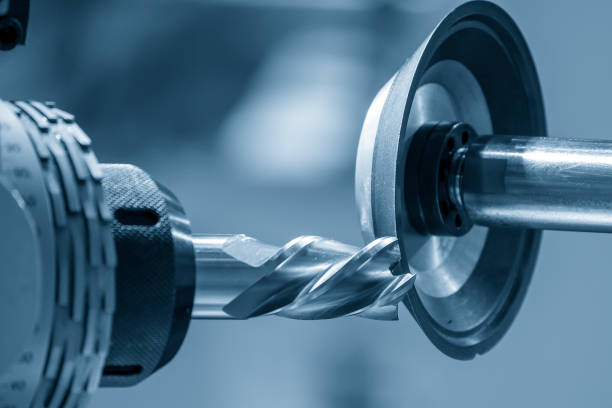
For those interested in understanding the manufacturing process in more detail, the intricacies of how a tool like this is crafted provide fascinating insights into the marriage of technology and precision engineering.
Lasting Impact on Industry Efficiency and Quality
PCD diamond-tipped drills continue to revolutionize how precision drilling is approached in demanding industrial environments. Their unique properties let manufacturers push the limits of speed and accuracy while maintaining cost control. As production demands grow more complex, the role of such advanced tooling solutions becomes ever more critical.
Embracing this technology means benefiting from reduced tool wear, fewer defects, and streamlined workflows. The ripple effects extend beyond the shop floor, influencing product quality, time-to-market, and overall competitiveness in global markets.
Creation date: Apr 7, 2026 1:29am Last modified date: Apr 7, 2026 1:29am Last visit date: Sep 18, 2026 9:02pm
Attach this document to an event, task, or address
You can attach a link to this document to an event in your Calendar, a task in your To Do list or an Address. Check the boxes below for the data you want to
bring into the event’s or task’s description, and then click “Select text to copy” to have the next event or task you create or edit have the document text and link.