To make sure your calendar, event reminders, and other features are always
correct, please tell us your time zone (and other details) using the
drop-down menus below:
Set Date/Time format:
In 12 Hour format the hours will be displayed as 1 through 12 with “a.m.” and “p.m.”
displayed after the time (ex. 1:00p.m.). In 24 hour format the hours will be displayed as 00 through 23 (ex. 13:00).
You can always change your time zone by going to your Account Settings.
Use the dropdown menu to view the events in another time zone. The primary time zone will be displayed in parentheses.
Use the dropdown menu to view the events in another time zone. The primary time zone will be displayed in parentheses.
Visiting Science Cache(username: sciencecache)
Tag
Please wait...
Select a Color
Manage Applications
Check the items that you want displayed. Uncheck all to hide the section.
Calendars
Files
Addresses
To Dos
Discussions
Photos
Bookmarks
The “Switch Navigator” button will no longer be available after February 14, 2017.
Please learn more about how to use the new Navigator by clicking this link.
What Are the Differences Between Mechanical and Hydraulic Bending Systems?
In the realm of metal fabrication, choosing the right bending system is crucial for achieving precision and efficiency. The question, "What Are the Differences Between Mechanical and Hydraulic Bending Systems?" addresses a fundamental decision faced by manufacturers and engineers. This analysis explores the distinctive characteristics, operational mechanisms, and practical implications of these two bending technologies.
Both mechanical and hydraulic bending systems serve the essential function of shaping metal sheets, yet their methods and applications vary significantly. Identifying the core differences helps stakeholders optimize production processes and select equipment aligned with specific fabrication needs. The following sections provide a detailed breakdown that clarifies these distinctions.
Core Operational Principles of Mechanical and Hydraulic Bending Systems
Mechanical Bending System Mechanics
Mechanical bending systems operate through a flywheel-powered ram that drives the bending process. The energy is stored mechanically and released rapidly, providing a consistent and high-speed bending action. This mechanism is ideal for repetitive tasks requiring speed and precision in metal deformation.
The mechanical system’s reliance on physical components results in a predictable stroke and force output. However, this limits flexibility since adjustments to bending parameters typically require manual changes to the machine setup. The system excels in applications where consistent bends are necessary over large production runs.
Hydraulic Bending System Mechanics
Hydraulic bending systems utilize fluid pressure to move the ram and execute bends. This approach allows for variable force and speed control, offering adaptability to different material thicknesses and types. The hydraulic mechanism provides smooth and precise bending cycles, especially suitable for complex or customized shapes.
The hydraulic design enables operators to adjust pressure settings digitally, facilitating on-the-fly modifications without physical reconfiguration. This flexibility makes hydraulic systems preferable in environments demanding diverse bending operations or where metal forming processes involve varying specifications.
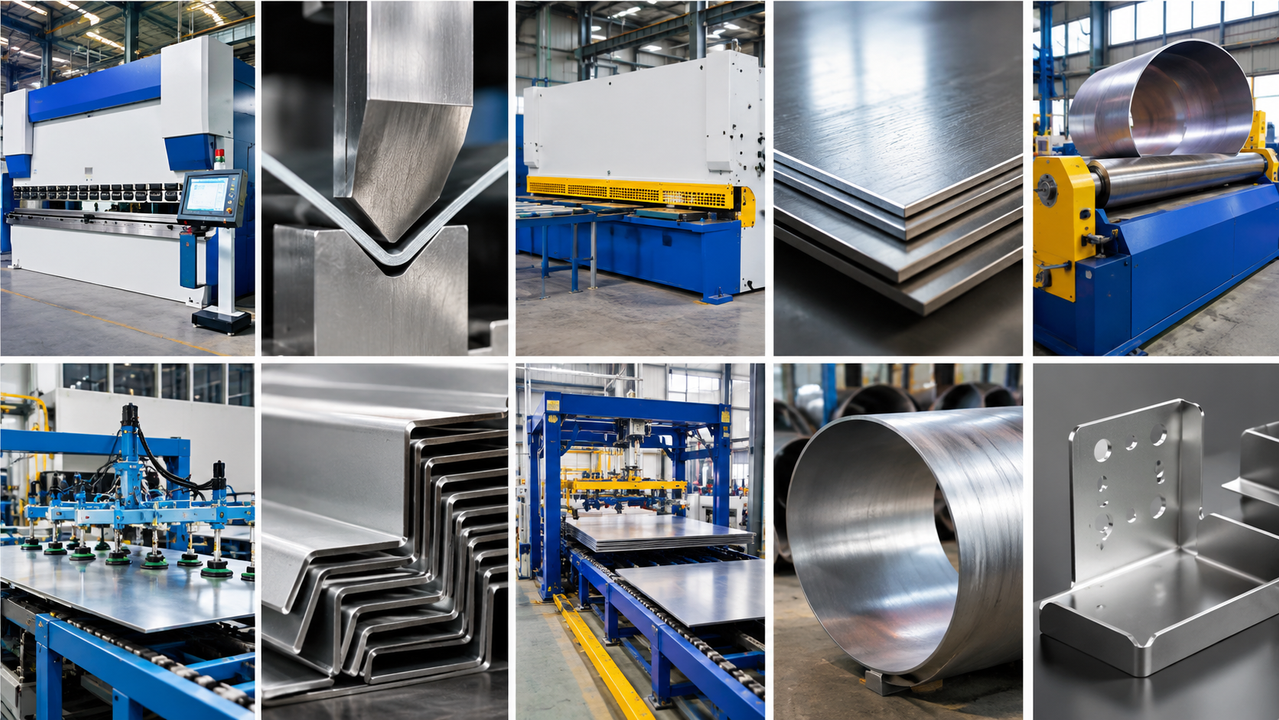
Manufacturers often reference press brake - Shenchong as a benchmark for reliable equipment that incorporates both mechanical efficiency and hydraulic adaptability, highlighting industry standards in bending technology. Whenever you need to find out the latest information about plate rolling machine - SHENCHONG, you have to browse https://www.shenchong.com/ website.
Comparative Analysis of Performance and Efficiency
Speed and Cycle Time Considerations
Mechanical bending systems generally outperform hydraulic counterparts in cycle speed due to their flywheel-driven operation. The rapid energy release enables high throughput, which is advantageous for mass production and high-volume tasks. However, this speed comes at the cost of less operational flexibility.
Hydraulic systems, while slower in cycle time, allow for precise control over bending force and position. This results in fewer errors and reduced material waste, particularly when handling complex bends or varying material grades. The trade-off between speed and control defines their respective efficiencies.
Force and Capacity Differences
The force exerted by mechanical systems is consistent and tied to the flywheel’s stored energy, often reaching high tonnage levels suitable for thick metal sheets. However, the inability to modulate force dynamically can limit performance when working with delicate materials or intricate designs.
Hydraulic systems excel in adjustable force application, enabling operators to fine-tune pressure to match material specifications. This adaptability reduces the risk of overbending or damaging the workpiece, increasing overall metal bending accuracy. The variable force also supports a wider range of industrial tooling selection for diverse fabrication tasks.
Maintenance, Durability, and Safety Impacts
Mechanical System Durability and Maintenance
Mechanical bending machines involve numerous moving parts that experience wear due to rapid and repetitive motion. Routine maintenance is essential to ensure longevity and consistent performance. Component replacement cycles and lubrication schedules must be strictly followed to prevent downtime.
Despite the mechanical complexity, these systems typically have robust construction. Their straightforward design can simplify troubleshooting but may require specialized expertise for repairs. Proper maintenance safeguards the machine’s operational lifespan and productivity.
Hydraulic System Maintenance and Safety
Hydraulic bending systems incorporate fluid dynamics, which introduces potential leak points and requires vigilant monitoring of hydraulic lines and seals. Maintenance focuses on fluid quality, pressure regulation, and the integrity of valves and pumps. These tasks are critical for preventing system failures.
From a safety perspective, hydraulic systems benefit from controlled force application, reducing the likelihood of sudden movements or mechanical failures. Compliance with metalworking safety standards is easier to achieve due to integrated pressure relief and emergency stop features. Documentation on CNC bending technology outlines best practices for safe operation in hydraulic press environments.
Application Suitability in Industry Contexts
Mechanical Bending in High-Volume Manufacturing
Mechanical bending systems are preferred in industries where speed and repetition are paramount, such as automotive assembly or appliance manufacturing. The consistent force delivery and rapid cycling support large-scale production with minimal variation in output quality. These systems handle standardized tasks efficiently.
However, their rigidity in process adjustment limits their use in custom or small-batch production. Operators must weigh the benefits of throughput against the inflexibility in bending angle correction and material adaptability.
Hydraulic Bending in Custom and Precision Fabrication
Hydraulic systems dominate sectors requiring high precision and adaptability, including aerospace, shipbuilding, and specialized metalworking shops. Their ability to vary pressure and speed allows complex shapes and varying thicknesses to be bent accurately. This supports innovations in curved plate fabrication and cylindrical metal forming.
The systems’ responsiveness to changing specifications enhances manufacturing process optimization, enabling facilities to accommodate diverse client demands without extensive machine downtime or recalibration.
What Are the Differences Between Mechanical and Hydraulic Bending Systems? Evaluating Their Impact on Fabrication Choices
Summarizing the Key Technical Contrasts
The primary differences lie in the source and control of bending force: mechanical systems rely on stored kinetic energy for rapid, consistent strokes, while hydraulic systems employ fluid pressure for adjustable, controlled movements. This fundamental divergence shapes their performance, maintenance needs, and safety profiles.
Mechanical bending offers exceptional speed and durability for uniform tasks, whereas hydraulic bending provides superior precision and flexibility for complex fabrication. Each system’s strengths correspond to distinct production environments and material requirements.
Decision Factors for Industry Practitioners
Choosing between mechanical and hydraulic bending systems depends on factors such as production volume, material variety, and required bend accuracy. Facilities prioritizing throughput may favor mechanical presses, while those emphasizing customization and precision often invest in hydraulic technology. Cost considerations and maintenance capabilities also influence selection.
Awareness of these differences empowers manufacturers to align their equipment with operational goals, optimizing metal fabrication workflow and enhancing product quality across applications.
Future Trends and Technological Integration
Advancements in automation and control systems continue to blur the lines between mechanical and hydraulic bending capabilities. Integration with robotic bending integration and automated material handling aims to improve reliability and reduce operator intervention. Ongoing research seeks to enhance metal bending accuracy and process repeatability.
Industry leaders are increasingly adopting hybrid systems that combine mechanical speed with hydraulic versatility, reflecting a trend toward flexible manufacturing solutions that address evolving market demands.
SHENCHONG
Wuxi Shenchong Forging Machine Co., Ltd.
Tianshun Road, Yangshan Industrial Park, Wuxi, Jiangsu, China 214156
Creation date: Nov 25, 2026 8:57pm Last modified date: Nov 25, 2026 8:57pm Last visit date: Nov 28, 2026 12:52am
Attach this document to an event, task, or address
You can attach a link to this document to an event in your Calendar, a task in your To Do list or an Address. Check the boxes below for the data you want to
bring into the event’s or task’s description, and then click “Select text to copy” to have the next event or task you create or edit have the document text and link.