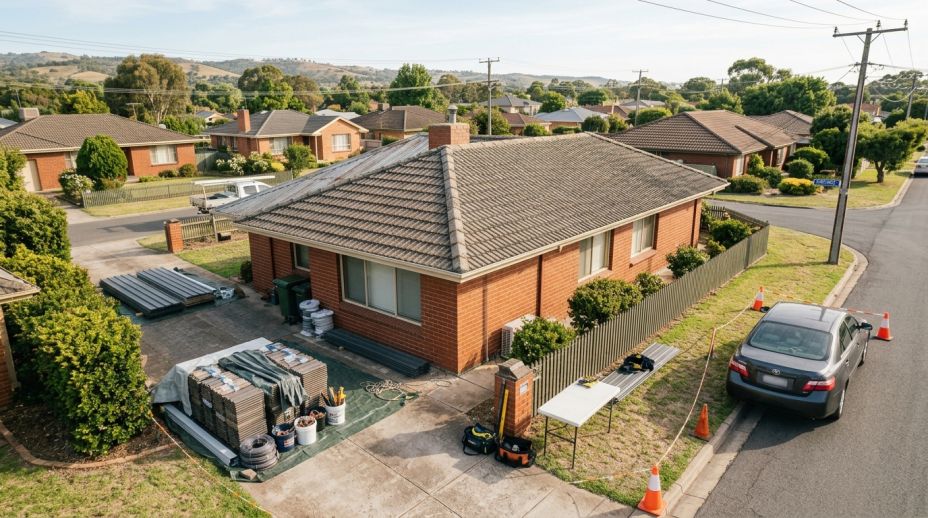
There is a strange part of a roof replacement that most people never really think about.
It is the period after the homeowner has finally decided, “We need a new roof,” but before anyone starts pulling old sheets off the building.
From the outside, it can look like nothing is happening. The roof is still there. The house looks exactly the same. There might be a few conversations, a quote sitting in an inbox and someone saying they are waiting for materials.
But quite a lot can happen during that period.
After spending years around construction sites, I have learned that the quality of a roofing job is influenced by decisions made long before anyone climbs a ladder.
A Roof Replacement Starts With More Than the Roof
The first thing that needs to be established is what actually needs replacing.
A homeowner might know there is a leak or that the roof looks tired, but that does not automatically tell you what is happening underneath the visible problem.
Water can travel. Rust can spread. Flashing can deteriorate. Gutters can contribute to problems that appear to be coming from the roof itself. Previous repairs can also hide issues that only become obvious during a proper inspection.
That is why I am always wary of reducing the conversation to something like, “How much for a new roof?”
The better question is what the property actually needs.
Once that is understood, everything else becomes easier to plan.
The Quote Is Really the Beginning of the Conversation
A roofing quote is not just a price.
It should give the homeowner a reasonable understanding of what is going to happen once the work begins.
What gets removed? What gets replaced? What materials are being used? Are gutters or flashing included? What happens to the old roofing material? Are there parts of the existing structure that might need attention?
These questions matter because two quotes can look completely different while both being technically correct.
One contractor may be allowing for more preparation or additional components. Another may have a narrower scope. Looking only at the final number can therefore be misleading.
For homeowners looking for experienced roofing contractors in Adelaide, the inspection and planning stage is an important opportunity to ask those questions before committing to the work.
I would much rather have a homeowner ask ten questions before the job starts than discover halfway through the replacement that they misunderstood what was included.
Then the Waiting Actually Has a Purpose
Once everything has been agreed, the job still does not necessarily start immediately.
There are materials to organise and measurements to confirm. The crew needs to be scheduled. Access to the property needs to be considered. Weather can affect the timing, particularly when the existing roof needs to be exposed during the work.
There are also the boring details.
Where will the old roofing go? Where can materials be delivered? Is there enough room around the house? Are there trees or power lines that create access problems? Does the homeowner need to move a vehicle?
None of these things make for an exciting conversation.
They are also exactly the sort of things that can turn a straightforward roofing job into a frustrating one if nobody thinks about them beforehand.
The Final Walk-Around Matters
Before the first sheet comes off, I like the site to make sense.
That means checking the access, looking at the roof again and making sure the conditions still match the original plan.
A property is not a drawing on a piece of paper. Things can change.
A vehicle might normally be parked where equipment needs to go. A section of the roof may look different after closer inspection. Weather may have changed the schedule. Materials may have arrived and need somewhere sensible to be stored.
The final check is not about creating drama or finding something wrong for the sake of it.
It is simply about avoiding surprises.
Construction rarely goes exactly according to plan, but good preparation removes a lot of the unnecessary problems.
The First Day Is Not Really the First Day
This is probably the part I think homeowners understand least.
When a roofing crew arrives and starts setting up, it feels like that is the beginning of the roof replacement.
It is not.
By that point, there should already have been decisions about the scope of work, materials, measurements, access, scheduling and disposal.
The physical work is simply the part that becomes visible.
And then comes the interesting moment: the old roof starts coming off.
That is when you finally get to see what has been hidden underneath.
Sometimes everything looks exactly as expected. Sometimes there are damaged areas or details that could not be properly assessed while the old roof was still covering everything.
This is another reason why I think communication matters so much during a roof replacement. A homeowner does not need to understand every technical detail, but they should know what is happening and why.
Good Preparation Is Invisible When It Works
The funny thing about preparation is that nobody notices it when everything goes smoothly.
The materials arrive when they should. The crew knows where to work. Access has been sorted. The old roofing has somewhere to go. The homeowner knows what to expect.
Nothing dramatic happens.
That is usually a good sign.
After years on building sites, I have come to appreciate jobs where the boring details have been handled properly. They give everyone a much better chance of getting the actual work done without unnecessary interruptions.
So if you have reached the point where you are saying, “We need a new roof,” don't think the next step is simply waiting for a crew to arrive.
There is a whole process between those two moments.
And in many ways, that process is what makes the final job possible.